











TimesofIndia.com in Singapore: For most of this week, moving between the courts at Singapore’s OCBC Arena for the 2026 NBA Rising Stars Invitational has almost become an exercise in repetition.A Japanese school wins comfortably. A Chinese side followed with another convincing performance. Australia imposes itself physically. South Korea plays with a level of organization that rarely looks rushed.Different jerseys. Different opponents. However, the model hardly changes. It’s not just that these teams keep winning. That’s how they win.The dance rarely stays still for long. A defensive rebound immediately becomes another attack. Five players spin almost instinctively, rarely looking towards the bench for direction. The full-court press refuses to give in, whether the game is level or the lead is already stretched out of reach.Watching from the court, it becomes increasingly difficult to separate individual talent from the system that produces it.This pattern followed in the second match of the Velammal International School in Hall 3 on Thursday afternoon.Against the Kyungbock High School of South Korea, the lone representatives of India found themselves chasing not only the basketball, but the speed with which the Koreans processed every situation.

(Photo credit: NBA Rising Stars Invitational)
By half time, the contest had almost slipped beyond recovery.Every time Velammal tried to build patience from the backcourt, another Korean defender came. Passing courses disappeared almost instantly. The loose balls were recovered before the Indian players could react. The full-court press stifled possessions before they even started, while every defensive rebound quickly became another attack.Each was the product of space, anticipation and timing. The fast breaks came in waves. Even routine possessions were executed with remarkable precision.The final score ended up reading 131-46.However, as the afternoon unfolded, the scoreboard gradually became the least interesting part of the story. The biggest question lingered long after the final buzzer.Why do the same basketball nations keep producing school teams that seem several steps ahead of everyone else?
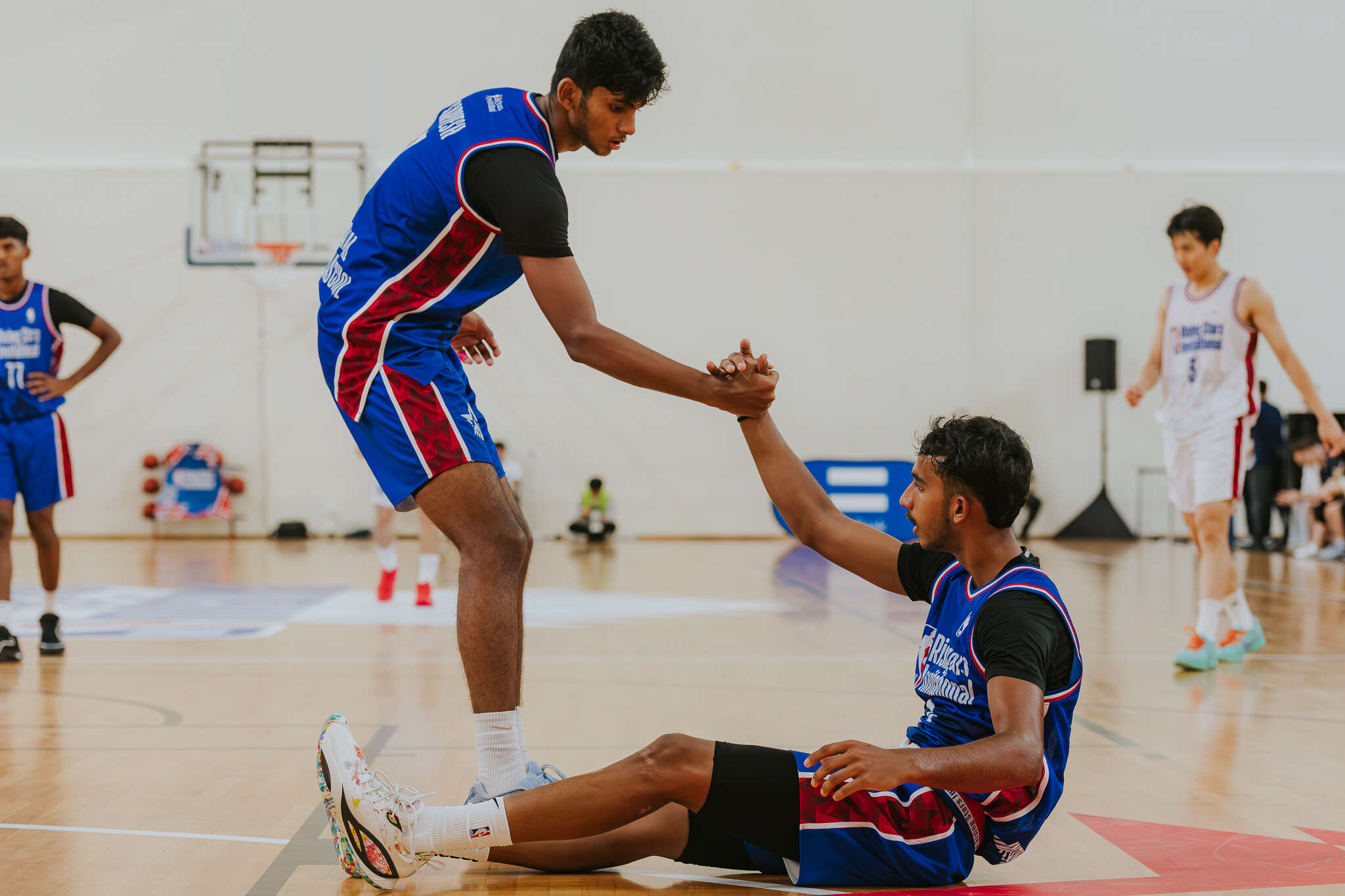
(Photo credit: NBA Rising Stars Invitational)
More than talent
From the stands, it was easy to assume that South Korea’s biggest advantage came from physicality.Coach Sungin Lim saw it differently.“The physical balance of the Indian team is really very good,” Lim told Timesofindia.com after the game. “His conditioning is also good. But compared to our players, the basics are missing. That’s where I saw the biggest difference.”His answer echoed what had unfolded in four quarters.Kyungbock wasn’t just bigger players. They defended as a unit.They trapped the ball handlers before the option to pass appeared. Each shot triggered another transition. Each player figured out where the next step was going before it was played.The numbers reflected that collective understanding. Kyungbock finished with 54 rebounds, 31 assists and 26 steals, forcing Velammal into 40 turnovers.But Lim insisted that these numbers are only the final product.“The most important thing is the volume of training,” he said. “Students have school, they have classes and they have other activities. So in that limited time, we try to maximize the intensity of training.“Basketball is always a team game. If you don’t have stamina, you can’t express your skill or your fundamentals on the court.”Watching the Koreans continue to press with the same intensity until the fourth quarter, it was hard to agree.
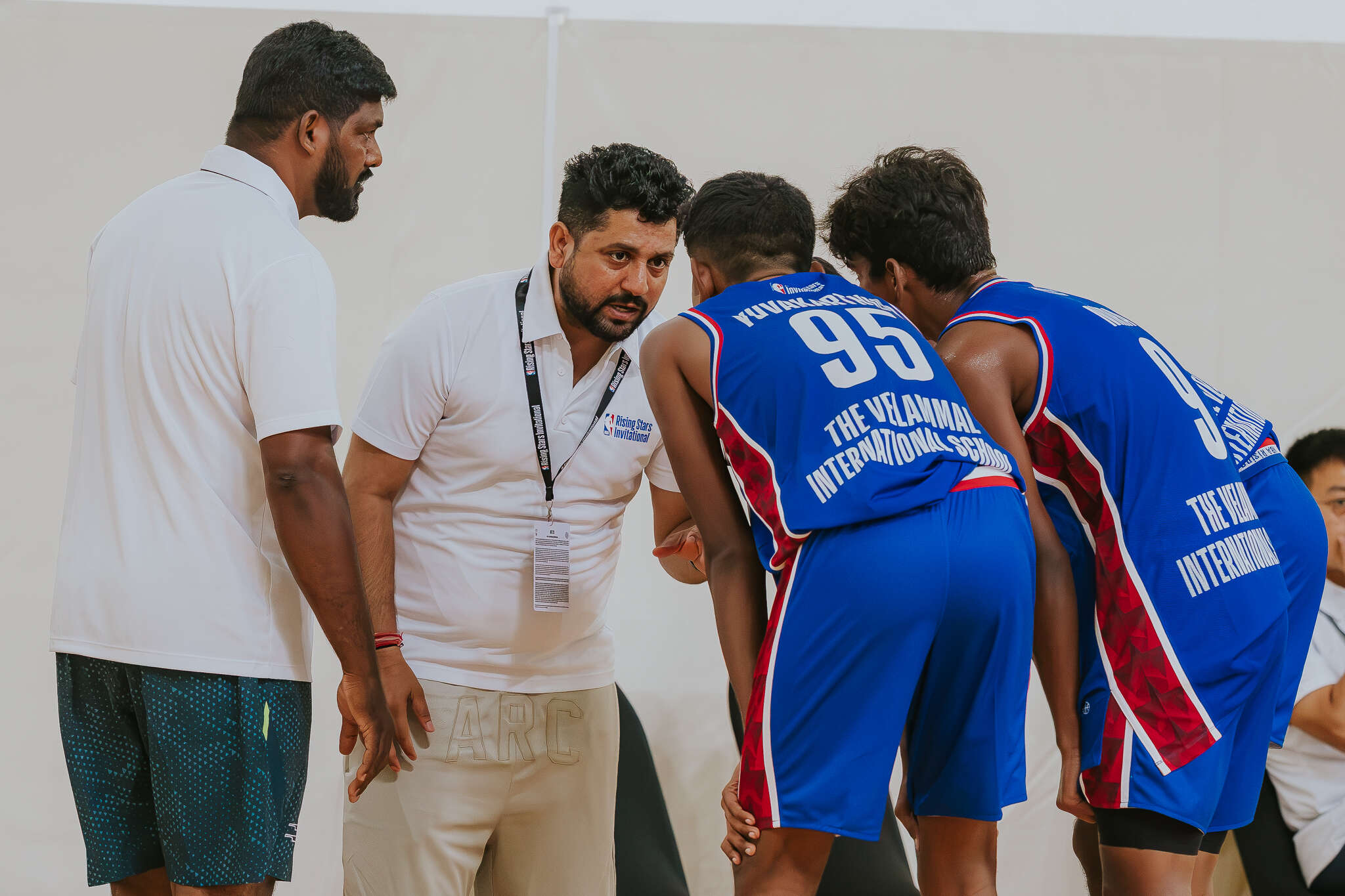
(Photo credit: NBA Rising Stars Invitational)
A road beyond the school
Interestingly, Lim was quick to dismiss the idea that South Korea’s success will only come from greater investment. In fact, I believe basketball gets less support today than it used to.“Korean basketball used to have a much stronger structure and infrastructure,” he explained.“The support is reduced compared to before.” Instead, South Korea focused on strengthening the ecosystem around its players.Elite basketball schools now work alongside club programs, expanding the player base while maintaining coaching standards.“The important thing is to bring more schools and clubs into the system,” Lim said. “You need more kids playing, but you also need the right coaches to help those kids reach their potential.”Most importantly, the journey doesn’t stop once high school basketball ends.Players move through a structured college competition before advancing to the professional KBL, creating a path that extends well beyond adolescence.High school is not the end. Many players go through college basketball first before entering the professional league.

(Photo credit: NBA Rising Stars Invitational)
India to take
Velammal coach Shamsheer Basha had spoken earlier in the week about India’s need to improve their fundamentals. Thursday only reinforced that belief.“Our guys were lazy today,” Basha admitted before adding: “There was a lack of practice, our defense wasn’t good, our offense wasn’t good.”Asked what impressed him most about South Korea, his answers came almost immediately.“His outside shooting is very good, his communication is very good, his game planning is very good, his full-court press is excellent.”“Our guys are moving slowly. Attacking right away. This experience is what we learned from this tournament. I will go back and teach these guys what we did wrong.”Velammal’s task became even tougher with Fyodor Prem Athithan, one of India’s leading performers against Indonesia, restricted to just ten minutes.Without their primary point guard, much of the responsibility shifted to former NBA India Academy player Kushal Singh, who spent long spells initiating the offense instead of looking for his points before finishing with 17.Captain Sri Saran Vadivel Murugan continued to fight throughout, adding 16 points despite the growing deficit.Kushal, however, refused to measure the week through victories or defeats.“I knew I had to get my teammates involved first,” he said. “It’s a team game. One player can’t do everything.”Reflecting on the tournament, he talked less about basketball and more about mentality.“As a team, we lack in many places. We lack mentality. We don’t have enough mental strength. We give up too soon.”Then came the line that perhaps best summed up why tournaments like the NBA Rising Stars Invitational matter.“Now we know our mistakes. We know where we stand as individuals and as a team. So we can come back better.”