




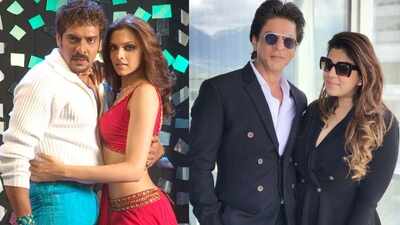
Even most people know that Deepika Padukone her first film was in Kannada titled ‘Aishwarya’. It was led by Indrajit Lankesh. As the director gears up for the release of his upcoming film ‘Jai Hind Jai Sindh’, he took a look back at ‘Aishwarya’ who was an important part of his career that launched Deepika. The filmmaker talked about finding the star of the future and casting him in his 2006 film by recalling how his confidence and looks were evident at the first meeting.Lankesh shared that he was looking for a new face when Deepika’s name was suggested to him. “I was looking for a new heroine, and someone recommended Deepika,” he said in an interview with IANS. The filmmaker revealed that their first meeting was arranged by Pooja Dadlani, who was managing Deepika at the time and now serves as. Shah Rukh Khanmanager of According to Lankesh, the casting happened immediately, even before he sat down to discuss the project.“We met and raised, and I started explaining the story. I hadn’t spoken two lines before he decided. That’s how Deepika was cast in Aishwarya. She already had confidence. I just created a culture where she could act without fear,” he said.Lankesh also recalled realizing Deepika’s potential long before she became an international star. He said that his personality and determination made him believe that he was destined to excel.“He had the height, the looks, the appearance of the screen, and, most importantly, the hunger to express himself. I told him one day that he would become a Hollywood star. A few years later, when he was working with Vin Diesel, I remembered the conversation.”The director also addressed the lingering misconceptions about Deepika’s early career. He also explained that he did not start working on “Om Shanti Om” while shooting for “Aishwarya”. According to him, Shah Rukh Khan introduced him for the first time in Bollywood only after “Aishwarya” completed a successful 100-day run.‘Aishwarya’ featured Upendra, Deepika and Daisy Bopannaand was the official film of the 2002 Telugu film ‘Manmadhudu’.