











TimesofIndia.com in SINGAPORE: By the time Velammal International School took the floor on Tuesday morning, the first impressions of the NBA Rising Stars Invitational had already been formed.The South Korean teams looked physically imposing. The Australians brought size and pace. Japanese teams moved with the confidence of a system that produced players like Rui Hachimura and Yuki Kawamura. Around the OCBC Arena, the differences in basketball cultures was impossible to miss.Among them all stood the lone representatives of India. A school in Chennai.For one week, some of the brightest young talents from all over Asia gathered under one roof. Some came with established systems behind them. Others carried decades of basketball tradition.Velammal came bringing something else: Expectation. Not necessarily from the tournament. But from a country that is still looking for its first breakthrough moment in basketball.The trip to Singapore had started months before. Velammal had emerged champions in the regional clusters before overcoming some of the strongest school teams in the country.The performances eventually attracted the attention of the Basketball Federation of India, which recommended the Chennai school for the tournament.“We have come here to win,” Kushal Singh had told Timesofindia.com before the team’s first game.“Every team is here to win. But we want to give everyone a hard fight. We want them to know that we can still hoop. Indian basketball is not slow. We can compete and we can challenge strong teams.”“We hope to create history here.”

Kushal Singh
A dream that survives familiar advice
Long before Singapore and the NBA, Kushal he was used to hearing the questions that follow most Indian athletes who dare to choose a sport other than cricket. Why basketball? Why not study? What about the future?People advised me to become a doctor, an engineer or a lawyer. Basketball, they felt, was not something worth betting a life on. His parents thought otherwise.“People tell him: ‘Get studying. You are not serious about his future,” said Kushal. “But my parents always tell me, ‘Just go play.’ We have to take care of everything. They keep pushing me forward.”The former NBA India Academy recruit has never hidden his ambitions. “My ultimate dream is to become the first Indian to represent in the NBA.”Asked in which shift he would like to be performed, Kushal smiled. “Any round. I just want to be drafted.”Next to him is point guard Fyodor Prem Athithan, whose basketball roots run even deeper. His mother Malavizhi is a former basketball player and his father, Prem, a college level footballer. The game was always around the sweet boy.

His dream, however, is different from Kushal’s.“My ambition is to play for India and help India win an Olympic medal.”
A coach who stayed with the game
For Shamsher Basha, the man who leads this group, basketball has been a journey of more than two decades.He learned the game watching seniors in Cheyyar before moving to Chennai and developing under coach TNR Chandran. Inspired by some Tamil NaduThe most successful coaches, he eventually moved into coaching himself.Sixteen years later, he continues to work with young players.Over the years, many of his students have gone on to represent India and Tamil Nadu. Others have found opportunities abroad and in colleges.However, Basha believes that the real challenge of Indian basketball starts much earlier.“The biggest difference is the fundamentals,” he told Timesofidia.com. “In countries like Japan, the fundamentals taught in schools are very strong. In India, the fundamentals are not very strong yet.”Infrastructure remains a challenge. So does nutrition. But perhaps the biggest battle is to change perceptions.“People in India do not value sports enough,” said Basha, adding “In countries like Japan and China, parents are very interested in sports. In our country, many people think that sports are a waste of time. Because of that mentality, coaches face many struggles.”
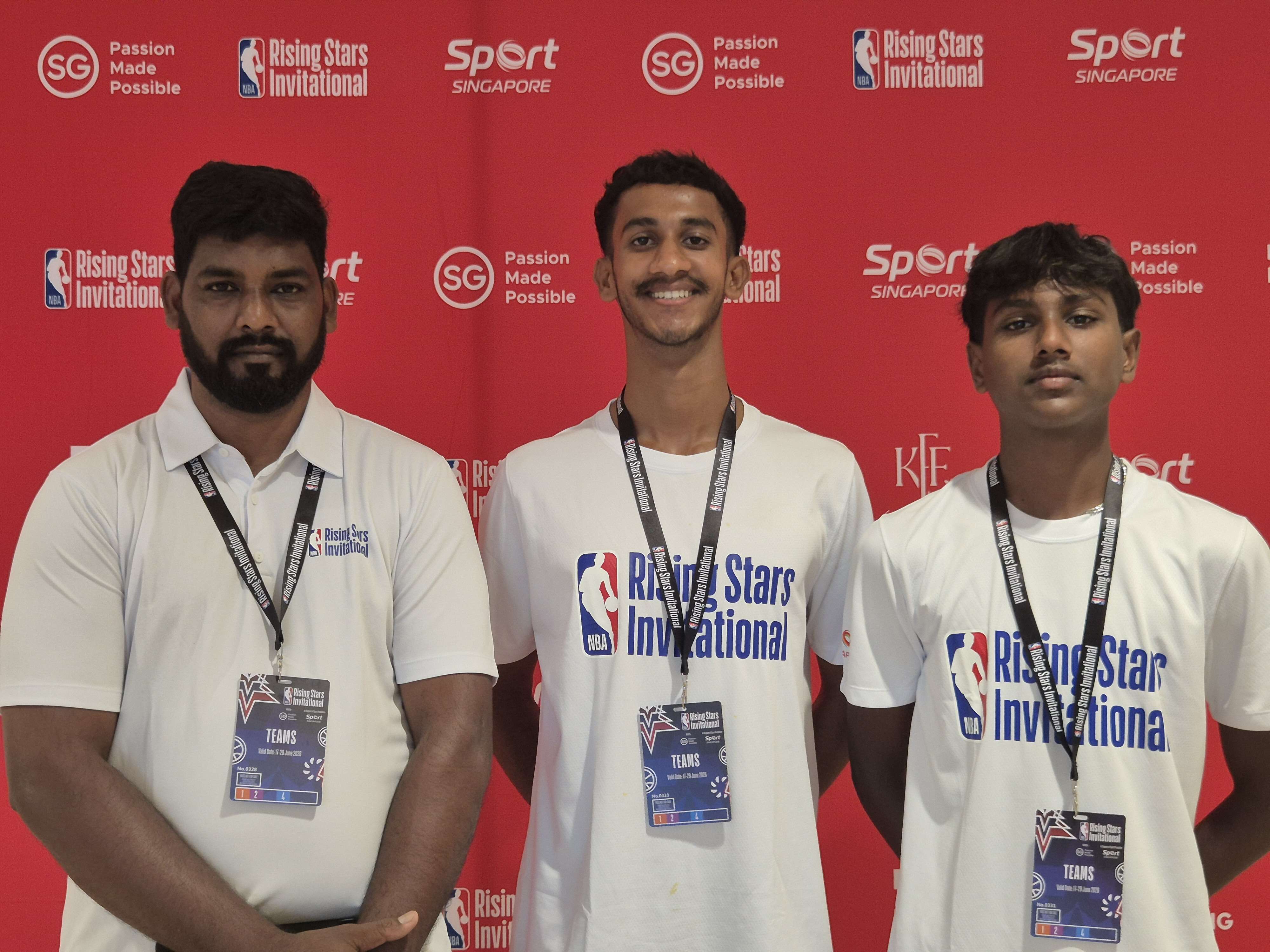
Shamsher Basha, Kushal Singh and Fyodor Prem Athithan
A next level look
Back at the OCBC Arena Hall 3, for almost two quarters against Indonesia’s Jubilee High School, Velammal looked comfortable.The scoreboard was moving back and forth. They led during the opening stages of the half and looked capable of matching the pace.Kushal attacked relentlessly and hit his three points at will. Fyodor, the point guard, plus Isiah Thomas contributed 15 points and four assists. He roamed the court with ease, read lanes brilliantly and produced timely interceptions while dictating the tempo.
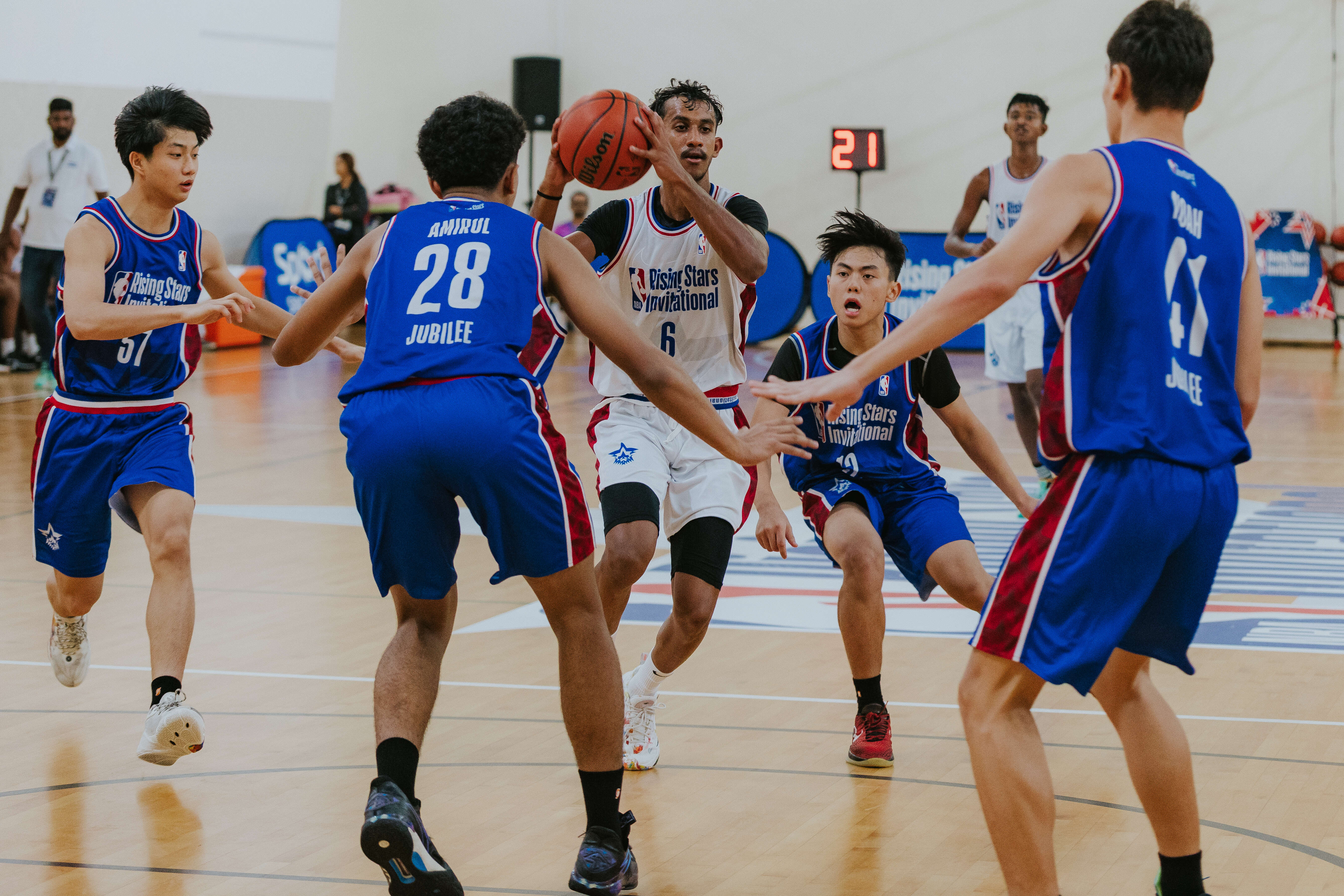
Kushal’s attack
Then the game changed.As the pace increased, the margins became visible.“In the first quarter, we scored very well and we had the lead. We also had the lead in the second quarter,” Basha said afterwards.“In the third quarter, we lacked stamina. Because of that, they took advantage with fast breaks and attacks. They scored easily, including three points and free throws. Our guys were very tired,” he added.The absence of Justice Ilesanmi Kayode, Gabriel Atem and Kuru due to visa issues only made matters more difficult.“If those players had come, we would have definitely won this tournament,” Basha said. Unfortunately, they couldn’t get their visas.”The scoreline eventually read 95-61.
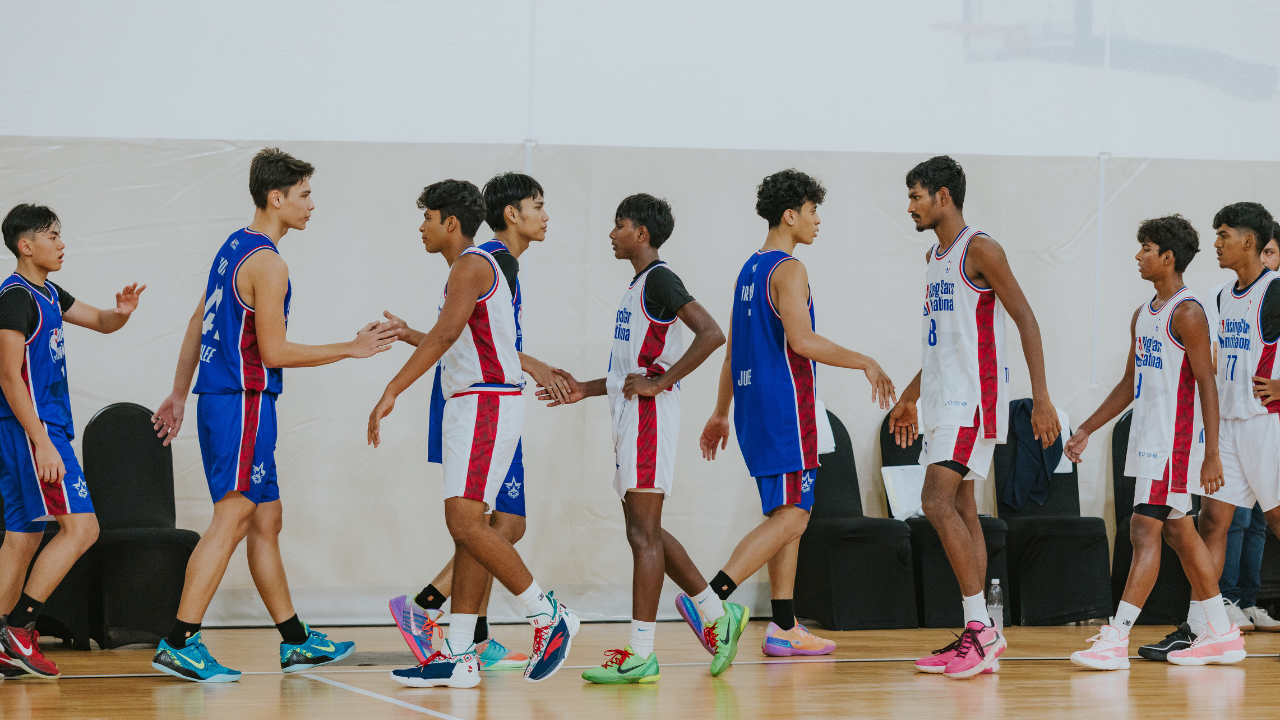
Photo of the team after the match
Yet for Basha, just sharing the court with teams from Indonesia, Australia, South Korea and Japan represented an opportunity his players had struggled to find at home.“We never expected to play in this tournament, so being selected itself made us very happy,” he said.“The students had a very good opportunity. We got to meet people from Korea and Japan, make friends and even watch NBA players. Sitting at home, we never had these experiences.”Basha believes that more tournaments of this nature can help bridge the gap that Indian basketball continues to face.“If more tournaments like this are organized, Indian basketball will definitely develop. Playing against foreign players and traveling outside India gives us valuable experience,” he said.Players also left the first game with something more important than disappointment: perspective.“We know other countries are better at basketball, so we have better competition to play against,” Kushal said.“Back in India, we were number one, so we can compete with any team there. Now that we have seen this level of competition, we understand as a team what we need to work on, what we are good at and what we are not so good at.“We can improve and come back next time to give these teams better competition. These teams are great at basketball, so we have to know where they stand as individuals. We just have to come back better.”For Fyodor, the lessons came in different ways.“It was a very good experience,” he said. “They were pressuring the full court. Back in India, there was no full court press, only zone defense. Here, there is full court pressure, so next time we should be able to handle it better and make the right moves.”
The dream remains
On the opening day of the tournament, Rui Hachimura talked about wanting to inspire more players from Asia to reach the NBA.“I think about all of Asia,” the Los Angeles Lakers forward had said.For Indian basketball, this road is still long.But at the OCBC Arena this week, that distance will become easier to grasp.A teenager dreams of helping India win an Olympic medal; another dream of hearing his name called on draft night. Other people’s dreams will be more or less the same.And for a Chennai school representing India on a bigger stage, still searching for its place in basketball, that dream remains enough to keep going.